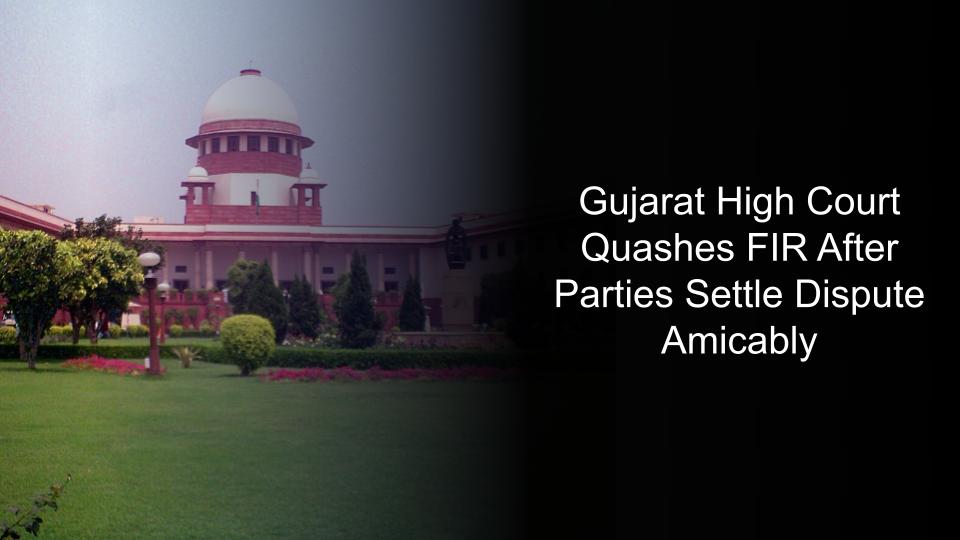
Gujarat High Court Quashes FIR After Parties Settle Dispute Amicably
The Gujarat High Court recently exercised its Section 482 Criminal Procedure Code powers to quash an FIR against six individuals after they reached an amicable settlement with the complainant. This decision highlights how Indian courts balance the public interest in prosecuting crime with private parties’ rights to resolve disputes outside court.
Background of the FIR and Charges
On July 6, 2018, Justice R.P. Dholaria reviewed FIR No. I-299/2017 registered at Vatva Police Station, Ahmedabad. The First Information Report accused the petitioners of:
- Criminal breach of trust
- Cheating
- Forgery
- Criminal conspiracy
Details of the FIR
The State of Gujarat and complainant Ishaji Kalji Thakor alleged serious offenses under the Indian Penal Code. After registration, both sides engaged community mediators to explore a settlement.
Community Intervention and Settlement
Respected local figures facilitated negotiations. Ultimately, the complainant confirmed the dispute was “fully resolved,” prompting a petition to quash the FIR as continuing the trial would amount to harassment.
High Court Proceedings and Key Arguments
State’s Opposition to Quashing
The public prosecutor argued the charges were too serious to dismiss and stressed the need for a full trial in the public interest.
Complainant’s Confirmation
Ishaji Kalji Thakor personally informed the court that his grievance stood redressed. He no longer wished to pursue criminal proceedings, citing the settlement as complete and fair.
Legal Framework: Section 482 and Supreme Court Precedents
Understanding Section 482 CrPC Powers
Section 482 CrPC grants High Courts inherent power to prevent abuse of the court’s process. Read more on Section 482 powers.
Relevant Supreme Court Judgments
- Gian Singh v. State of Punjab – Courts can quash proceedings if a private dispute is settled.
- Madan Mohan Abbot v. State of Punjab – Further trial after full settlement is an abuse of process.
Key Takeaways from the Gujarat High Court Ruling
- Amicable Settlements Can End Cases: Private disputes resolved outside court may lead to quashing of related FIRs.
- Section 482 Powers: High Courts can stop proceedings that serve no public interest and cause undue harassment.
- “Without Prejudice” Orders: Other stakeholders retain their rights to file separate claims.
- Following Supreme Court Guidance: Aligns with landmark judgments that curb unnecessary trials.
Implications for Legal Professionals and Students
This ruling is a must-read for law students, criminal law practitioners, and anyone interested in the intersection of private settlements and public prosecution. It underlines how Indian courts uphold procedural fairness while preventing misuse of legal processes.
Conclusion
The Gujarat High Court’s decision to quash the FIR after an amicable settlement demonstrates the judiciary’s commitment to efficient dispute resolution under Section 482 CrPC. By following Supreme Court precedents, the court ensured justice without unnecessary litigation. For more insights on similar cases, explore our Criminal Law section or read our guide on effective amicable settlements in India.

Leave a Reply to admin Cancel reply